
Blog
7 Powerful Factors That Affect Charcoal Briquettes Burning Time

Table of Contents
- Factors Affecting Burning Time
- Density and Composition
- Moisture Content
- Airflow and Ventilation
- Size and Shape
- Storage and Handling
- Choosing Quality Briquettes
What Affects Charcoal Briquettes Burning Time?
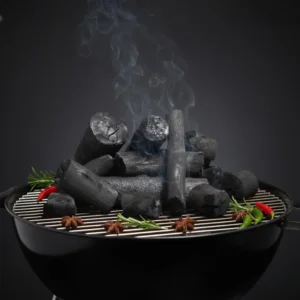
Charcoal Briquettes are widely used for grilling, restaurants, barbecue businesses, and other cooking applications because they can provide consistent heat. However, their burning time can vary considerably depending on their composition, manufacturing quality, storage conditions, and how they are used.
Understanding these factors helps buyers select suitable fuel and use it more efficiently. For commercial users, choosing reliable Charcoal Briquettes can also help maintain consistent cooking temperatures while reducing unnecessary fuel consumption.
1. Density and Composition
Density is one of the most important factors influencing how long briquettes burn. Denser briquettes generally contain more combustible material in a compact structure, allowing them to burn steadily for an extended period.
The composition also matters. Raw materials, carbon content, binders, and production methods can affect ignition speed, heat output, ash production, and overall burning performance.
- Higher density can support longer, steadier combustion.
- Consistent carbon content promotes predictable heat.
- Good production quality helps maintain uniform performance.
2. Moisture Content
Moisture can significantly affect Charcoal Briquettes performance. Briquettes with excessive moisture may require more energy to ignite because some of the heat is used to evaporate water before efficient combustion can begin.
Properly dried briquettes usually ignite more efficiently and provide more predictable heat. For this reason, moisture control during manufacturing and storage is essential for buyers who require consistent fuel quality.
3. Airflow and Ventilation
Combustion requires oxygen, making airflow another major factor in burning time. Too much airflow can make briquettes burn rapidly, while insufficient ventilation can reduce combustion efficiency and heat output.
Users should therefore control vents and airflow according to the cooking equipment. A balanced supply of oxygen allows Charcoal Briquettes to maintain heat without consuming fuel unnecessarily fast.
4. Size and Shape
The physical size and shape of a briquette influence how quickly heat moves through the fuel. Larger or more compact pieces may take longer to ignite but can potentially provide a more sustained burn.
Uniform shapes are particularly useful for commercial applications because they can provide more predictable airflow and heat distribution. Consistency is valuable when restaurants need repeatable cooking results throughout service.
5. Raw Material Quality
The raw materials used to produce Charcoal Briquettes can have a direct effect on combustion characteristics. Different biomass sources and charcoal materials may produce different levels of fixed carbon, volatile matter, and ash.
High-quality raw materials combined with controlled processing can contribute to stable heat and reliable burning performance. Buyers should ask suppliers about raw material sources and product specifications before purchasing in bulk.
6. Storage and Handling
Even high-quality briquettes can lose performance when stored incorrectly. Exposure to humidity, rain, or damp environments can increase moisture absorption and make ignition more difficult.
Store Charcoal Briquettes in a dry, covered, and well-ventilated area. Keeping packaging intact and protecting products from direct contact with water can help preserve their original condition.
7. Cooking Equipment and Usage
Burning time also depends on the equipment and cooking method. A barbecue grill with strong ventilation may consume fuel faster than a controlled cooking system with restricted airflow.
Cooking temperature, food quantity, briquette arrangement, and the frequency of opening the grill can also influence fuel consumption. Consistent operating practices therefore help users achieve more predictable results.
How to Choose Quality Charcoal Briquettes
When purchasing briquettes for commercial or wholesale use, buyers should evaluate several technical and practical characteristics rather than focusing only on appearance. A consistent product specification makes it easier to estimate fuel requirements and maintain cooking performance.
- Check moisture content and storage conditions.
- Compare density and briquette consistency.
- Review fixed carbon and ash specifications.
- Consider the intended cooking application.
- Ask for product samples before large orders.
- Choose a supplier with consistent production quality.
For general background information about charcoal and related materials, readers can also consult this trusted reference. For commercial sourcing and product information, visit CV BERKAH WIJIL.
Conclusion
The burning time of Charcoal Briquettes is influenced by several connected factors, including density, raw materials, moisture, airflow, size, storage, and usage conditions. No single specification determines performance on its own.
For businesses that depend on reliable cooking fuel, selecting consistent Charcoal Briquettes and storing them correctly can make a meaningful difference. Understanding these factors allows buyers to make better purchasing decisions and achieve more predictable heat during everyday operations.